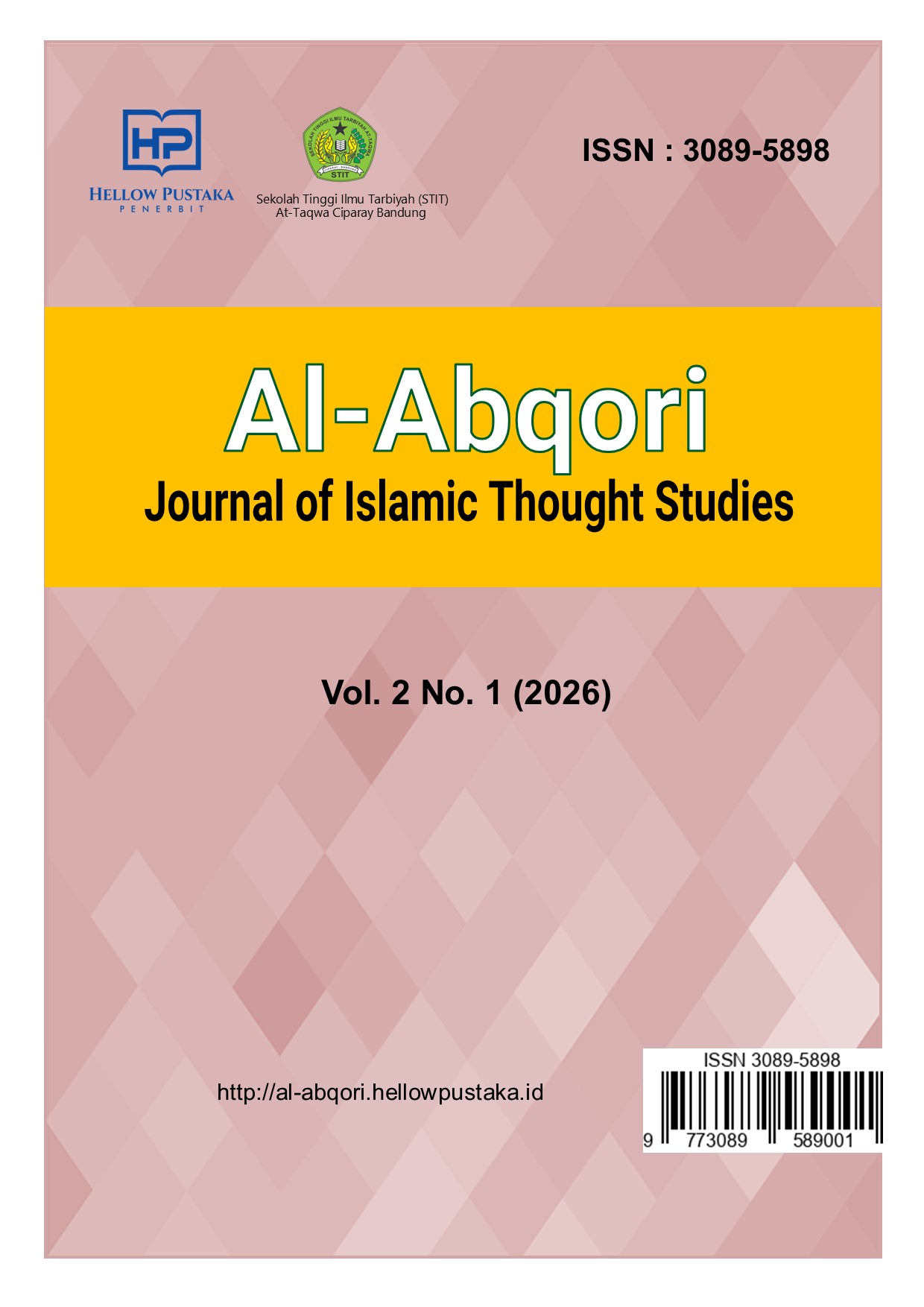
Synthesis of Mantiq and Kalam: A Study of the Theological Reasoning of the Millennial Muslim Generation
DOI:
https://doi.org/10.61166/abqori.v2i1.27Keywords:
theology, logic, theological reasoning, millennial generation, rationality, Islamic education, industrial revolutionAbstract
Theology and logic are two branches of science that have a central role in the development of theological reasoning in the Islamic tradition. Theology focuses on the discussion of Islamic faith and beliefs using rational arguments to strengthen and maintain faith, while logic is the science of logic that regulates correct and systematic ways of thinking in order to produce valid conclusions. The synthesis between logic and theology is very relevant in the context of the development of the thinking of the millennial generation of Muslims who live in the digital and globalization era, where intellectual and social challenges are increasingly complex. This study uses a qualitative method with a literature study approach to examine how the principles of logic (logic) are applied in theology in order to build critical, rational, and adaptive theological reasoning to the dynamics of the times. This study examines the existence of logic as a basis for thinking, the implications of bayani, burhani, and irfani reasoning in Islamic science, and the role of theology in facing contemporary theological challenges. The results of the study show that the synthesis of logic and theology not only strengthens faith rationally, but also equips the millennial generation of Muslims with critical and dialogical thinking skills that are able to answer religious and social problems scientifically. Therefore, strengthening theological education based on logic is a strategic need in building the theological reasoning of the millennial generation that is relevant and constructive in facing the industrial revolution and current global challenges.
References
Abdullah, M. (2015). Filsafat Kalam dan Logika Islam: Sebuah Pendekatan Interdisipliner. Jakarta: PT. RajaGrafindo Persada.
Al-Ghazali, H. (2004). Tahafut al-Falasifa. Beirut: Dar al-Ma'rifah. (Terjemahan dan interpretasi: S. M. Athar)
Azmalia Anastasya Marcella, Mikyal Kaisa Rasyid, & Khabib Alwi. (2025). The Relevance of Essentialist Philosophy in Maintaining Moral Values in the Modern Era and the Perspective of Islamic Educational Philosophy . Al-Falsafah: Jurnal Pemikiran Dan Filsafat Islam, 1(2), 123–134. https://doi.org/10.61166/falsafah.v1i2.23
Dewi, R. P. (2018). Pengembangan Nalar Teologis Generasi Milenial melalui Pendekatan Sintesis Ilmu Mantik dan Kalam. Jurnal Pemikiran Islam, 12(2), 145-165.
Erna Robiatul Adawia, Maspuroh, Ahmad Daud, & Muhammad Nursyauqi. (2026). The Essence of Islamic Philosophy. Bibliotheca: Journal of Philosophy, 1(2), 43–52. https://doi.org/10.61166/bibliotheca.v1i2.12
Hassan, M. K. (2012). Revitalisasi Ilmu Kalam dalam Perspektif Generasi Milenial. Jurnal Studi Islam, 8(1), 55-70.
Khalil, M. (2019). Logika dan Teologi dalam Pemikiran Islam. Bandung: Mizan Publishing.
Kunkel, R. (2011). The Role of Logic in Islamic Theology. International Journal of Middle Eastern Studies*, 43(3), 423-440.
Nasr, S. H. (2006). Islamic Science: An Illustrated Study. Albany: State University of New York Press..
Nirhamna Hanif Fadillah, Mohammad Hanief Sirajulhuda, & Amir Reza Kusuma. (2025). Meaning of Science Concepts (Study Analysis of the Meaning of Science According to Syed Naquib Al-Attas). Al-Falsafah: Jurnal Pemikiran Dan Filsafat Islam, 1(2), 76–102. https://doi.org/10.61166/falsafah.v1i2.11
Rashid, A. (2017). Nalar dan Keyakinan: Telaah atas Pemikiran Generasi Milenial Muslim. Jurnal Pemikiran Islam, 14(3), 210-230.
Siti Mursalina, Maspuroh, Rismayanti, & Rizqi Nazwa Ramdhani. (2025). Deviations in Islamic Scientific Orientation Through Secularism. Al-Iffah: Journal of Islamic Sciences Research, 1(3), 147–157. https://doi.org/10.61166/iffah.v1i3.12
Sulaiman, M. (2010). Filsafat dan Kalam Islam: Sebuah Pengantar. Jakarta: Gramedia Pustaka Utama.
Yuvita Nila Rahayu, Masniatul Ilmiah, Moch Imam Machfudi, & Suparwoto Sapto Wahono. (2026). Honesty as the Main Virtue: A Study of Al-Farabi’s Moral Philosophy. Bibliotheca: Journal of Philosophy, 1(2), 82–93. https://doi.org/10.61166/bibliotheca.v1i2.30
Yusuf, M. (2014). Pengantar Ilmu Kalam. Bandung: Mizan Pustaka.
Downloads
Published
How to Cite
Issue
Section
License
Copyright (c) 2026 Didin Hidayat, Nazla Fahira Balfas, Rehan Hamaludin, Samsul Rijal, Siti Aditta

This work is licensed under a Creative Commons Attribution 4.0 International License.